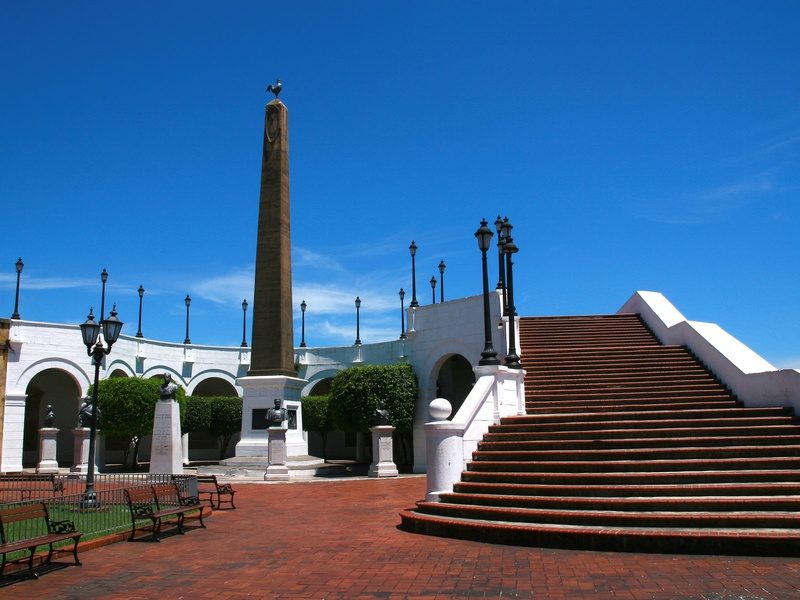
Plaza de Francia
This square honors the French attempt to build the Panama Canal and offers views of the Pacific Ocean.
Walk to the sea wall for unobstructed bay and skyline views.

Casco Viejo's cobblestone grid opens 24 hours a day with zero admission charge, making it one of Panama City's most accessible heritage experiences. This guide maps the district's walkable core and explains what you'll encounter along the way.
Quick answer
A casco viejo walking tour free of charge is entirely feasible because the historic district operates as a publicly accessible neighborhood with no entrance gates or admission fees. The quarter spans roughly 0.4 square kilometers, and most visitors complete a comprehensive route in 90 minutes to two hours. Early morning visits between 08:00 and 10:30 offer cooler temperatures and fewer crowds, though the streets remain safe and navigable throughout daylight hours.
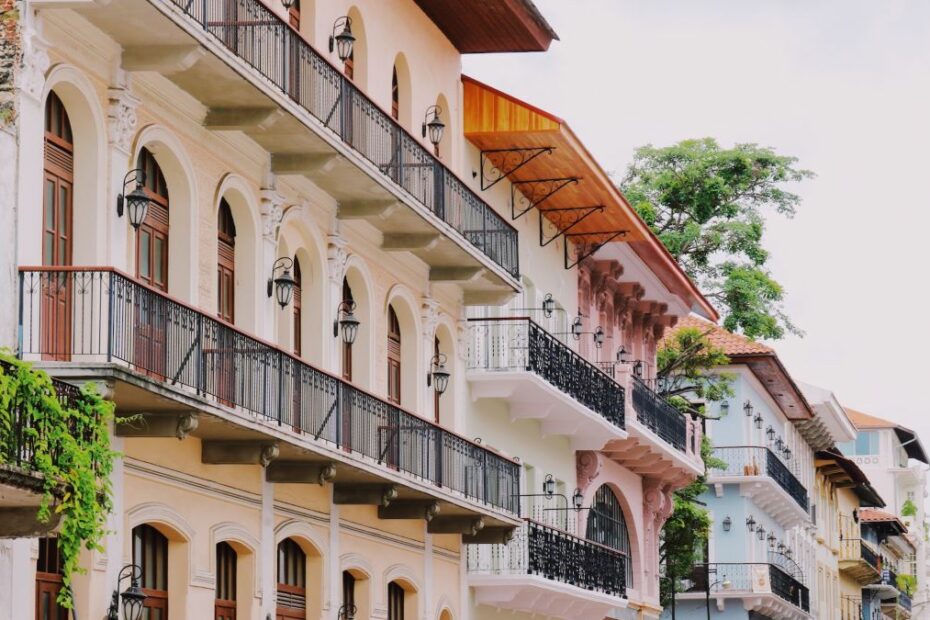
The oldest continuously inhabited settlement on the Pacific coast of the Americas occupies a small peninsula jutting into Panama Bay, where stone fortifications met the sea in 1673. Today that peninsula holds 780 preserved structures, 11 distinct plazas, and a UNESCO World Heritage designation that protects both Spanish colonial facades and the residential community still living inside them. A self-guided casco viejo walking tour free of formal structure lets you trace the district's natural chronology from south to north. The southern tip anchors around Plaza de Francia, where vaulted dungeons beneath the seawall once held prisoners during the canal construction era. Moving inland, the route passes the Metropolitan Cathedral's twin bell towers, continues through Plaza de la Independencia where Panama declared separation from Colombia in 1903, and reaches the renovated waterfront promenade along Cinta Costera. Side alleys reveal bougainvillea-draped balconies, artisan workshops in converted townhouses, and the occasional ruin left deliberately unrestored as a historical marker. The district's compact footprint and pedestrian-only zones make navigation straightforward, though signage remains inconsistent outside the main plazas. Most landmarks cluster within three parallel streets running the peninsula's length, and the grid rarely exceeds four blocks in width. Visitors encounter functioning churches, government offices, and family-run businesses alongside restored heritage buildings, creating a living neighborhood rather than an open-air museum. The absence of admission barriers means you control the pace, the route, and the depth of exploration. Practical considerations shape the experience as much as architectural interest. Tropical heat peaks between 11:00 and 15:00, when the stone streets reflect sun and humidity climbs above 80 percent. Shade concentrates in narrow alleys and interior courtyards, not along the waterfront promenades where most guidebooks direct first-time visitors. The district's eastern edge borders Barrio Santa Ana, a lower-income residential area where street conditions change abruptly; most walking routes keep to the peninsula's western and central corridors. Evening visits after 17:00 bring softer light for photography and open-air restaurant seating, though some interior landmarks close by 18:00.
“The district's 780 preserved structures tell three centuries of Pacific trade, political upheaval, and architectural adaptation compressed into 40 city blocks.”
Casco Viejo is a public historic district, meaning there is no fee to enter or walk through the neighborhood. Costs only apply if you choose to book a private guide or join a commercial tour service.
Verdict: A typical adult pays 0 USD to walk through the district, though guided services incur separate, vendor-specific costs.
The best arrival window is 08:00–10:30 to experience lower temperatures and smaller crowds for a more comfortable walking experience.
Warm and sunny, 30°C to 32°C. These months offer clear skies but require early starts to manage heat.
Humid with periodic rain, 28°C to 30°C. Frequent showers often occur in the afternoons, favoring morning tours.
— Early morning hours provide the most space to move through the historic streets before peak midday heat.
Verdict: For the most comfortable experience, plan your visit during the dry season, ideally Tuesday to Thursday between 08:00 and 10:30.
Casco Viejo is located on a peninsula in Panama City, with the main entrance accessible via Cinta Costera 3 or Avenida Central. Most visitors reach the historic district by taxi or rideshare services for direct drop-off at the perimeter.
Line 1 to 5 de Mayo Station
Direct to Casco Viejo entrance
Access via Cinta Costera 3
Request drop-off at Plaza Herrera or the entrance near the National Theater to begin your exploration in the heart of the district. Be aware that parking within the historic area is limited and restricted.
This route covers Casco Viejo's essential plazas, churches, and colonial architecture in approximately 2–3 hours, suited for independent walkers comfortable with uneven cobblestones.
Begin at the district's central square, home to the Metropolitan Cathedral with its twin bell towers. Spend 15 minutes exploring the plaza and cathedral exterior.
Follow the bayside promenade along the seawall for ocean views and skyline photos. The 10-minute walk connects the plaza to Bolívar Square.
Visit the compact plaza with its Simón Bolívar monument and the adjacent Iglesia de San Francisco de Asís. Allow 20 minutes to walk the interior if the church is open.
Walk west along Calle 5ta to see restored colonial façades, balconies, and local shops. This 15-minute segment shows the neighborhood's residential character.
Pass the neoclassical National Theater (photo stop only) and continue to Plaza Herrera, a leafy square popular with locals. Take 20 minutes to rest and observe daily life.
End at the Panama Canal Museum to contextualize the district's role in canal history. Entry requires a separate ticket; exterior visit takes 10 minutes.
Casco Viejo features a dense concentration of colonial-era architecture, plazas, and religious sites that define the character of Panama City's historic district. These landmarks serve as focal points for understanding the area's layout and cultural evolution.
This square honors the French attempt to build the Panama Canal and offers views of the Pacific Ocean.
Walk to the sea wall for unobstructed bay and skyline views.
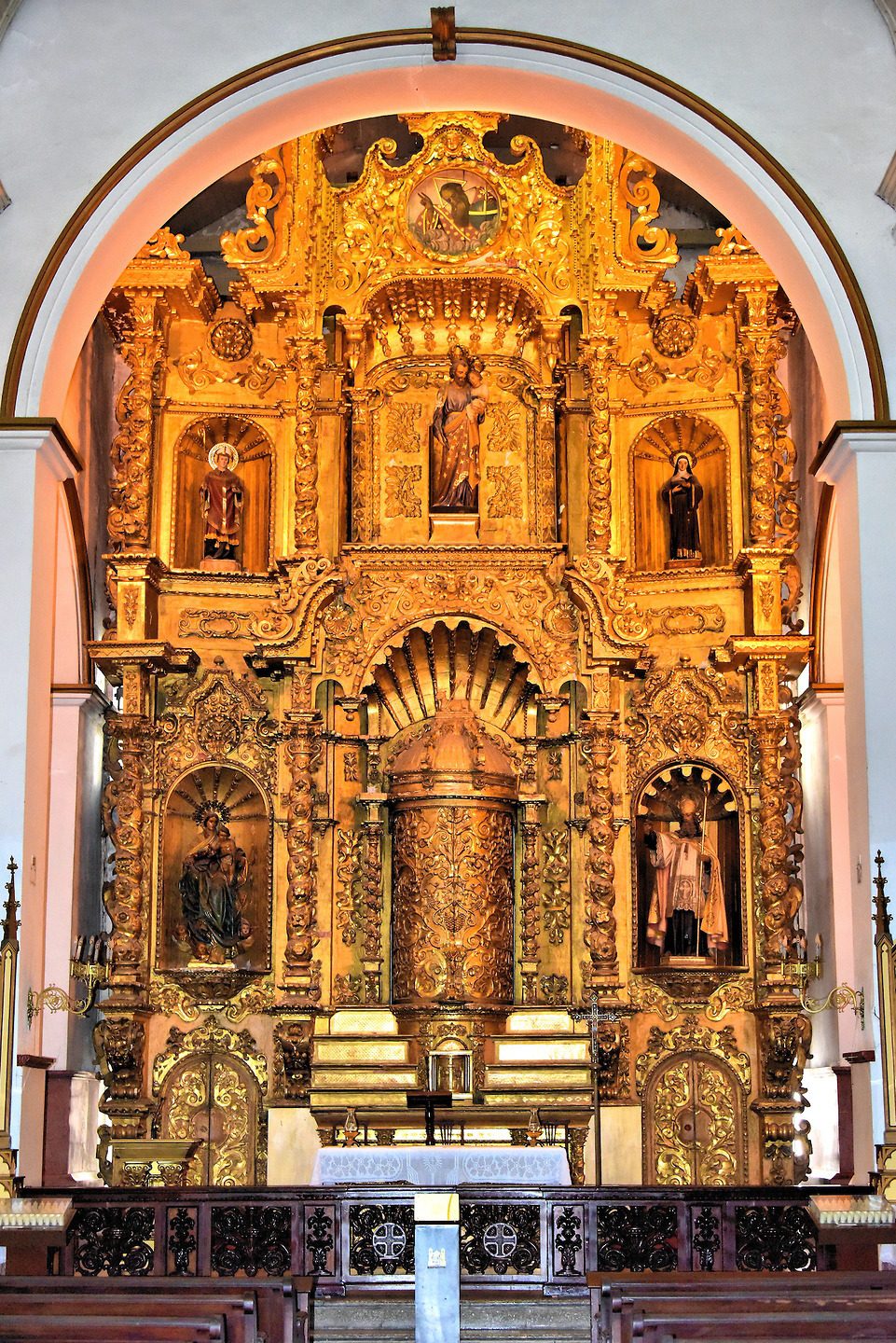
Known for its ornate Golden Altar, this church was carefully relocated from the original Panama City settlement.
Observe the intricate carvings on the gilded wooden baroque altar.
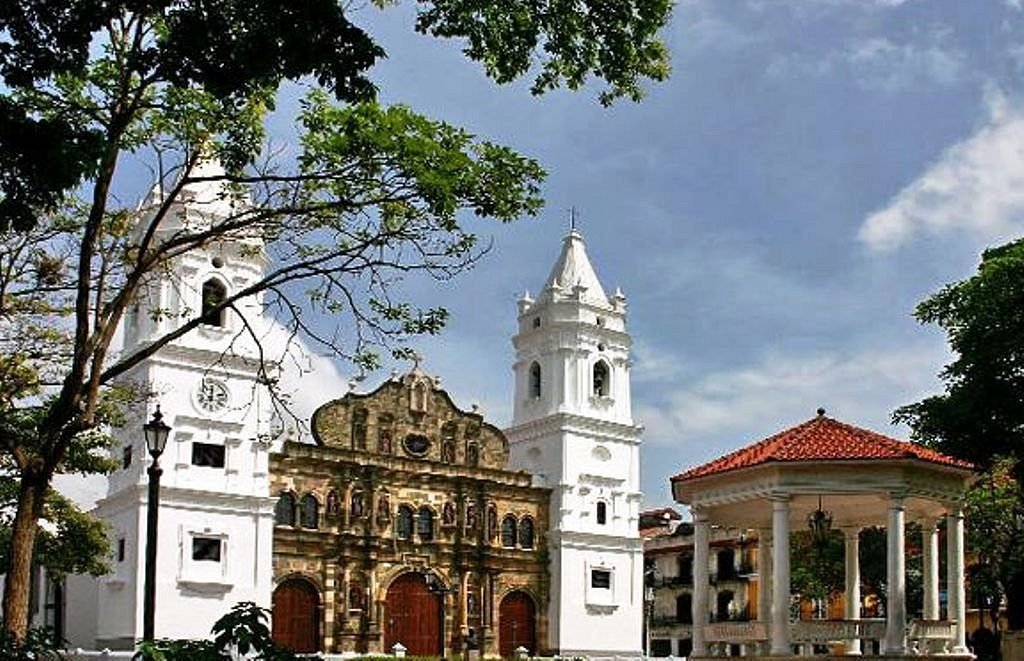
Often referred to as the main plaza, this site is where Panama's independence from Colombia was proclaimed.
Identify the cathedral facade architecture from the center of the square.
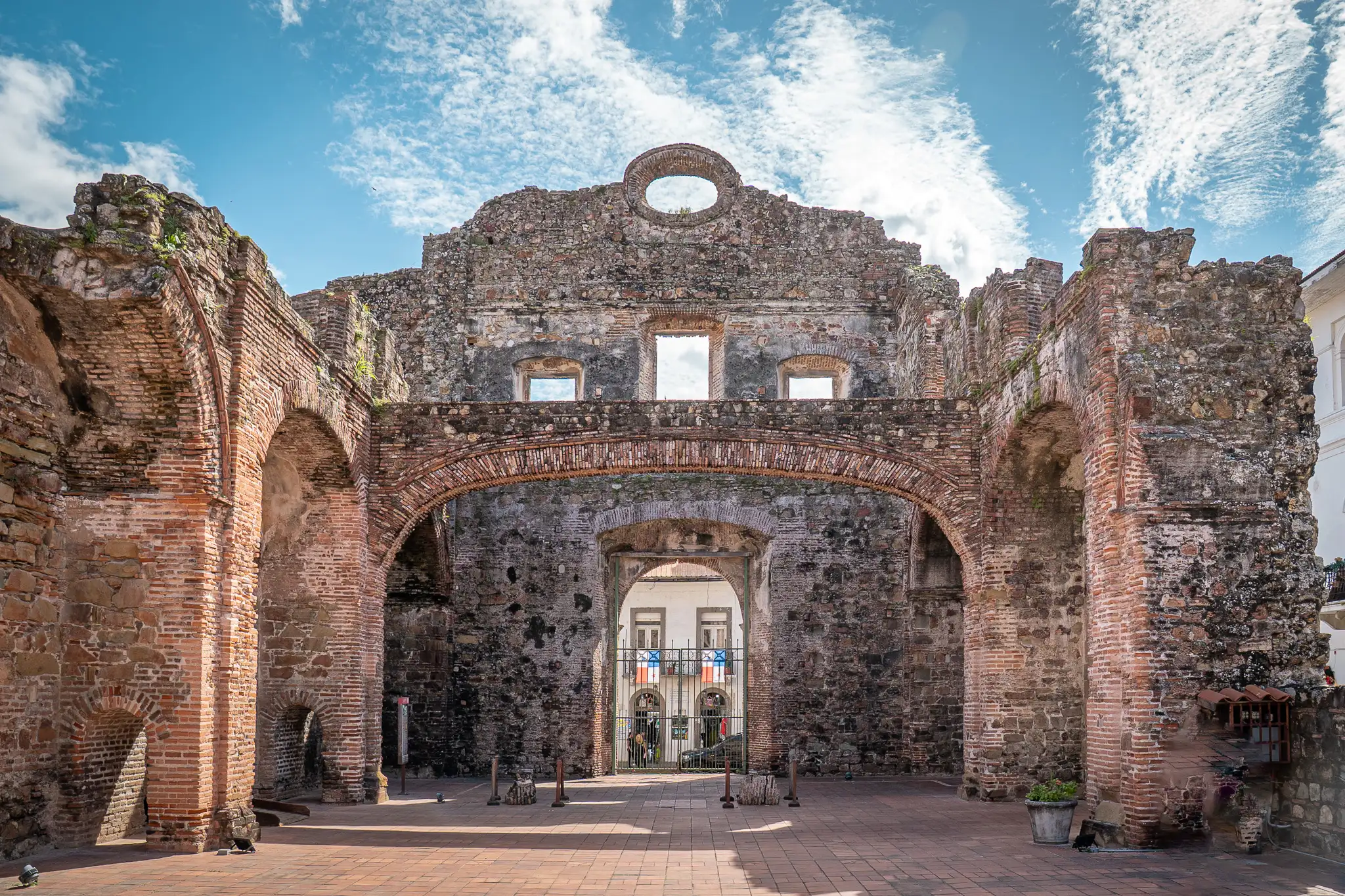
These ruins are the remains of the Convent of Santo Domingo and are famous for their flat arch structure.
View the arch from the side to appreciate its structural integrity.
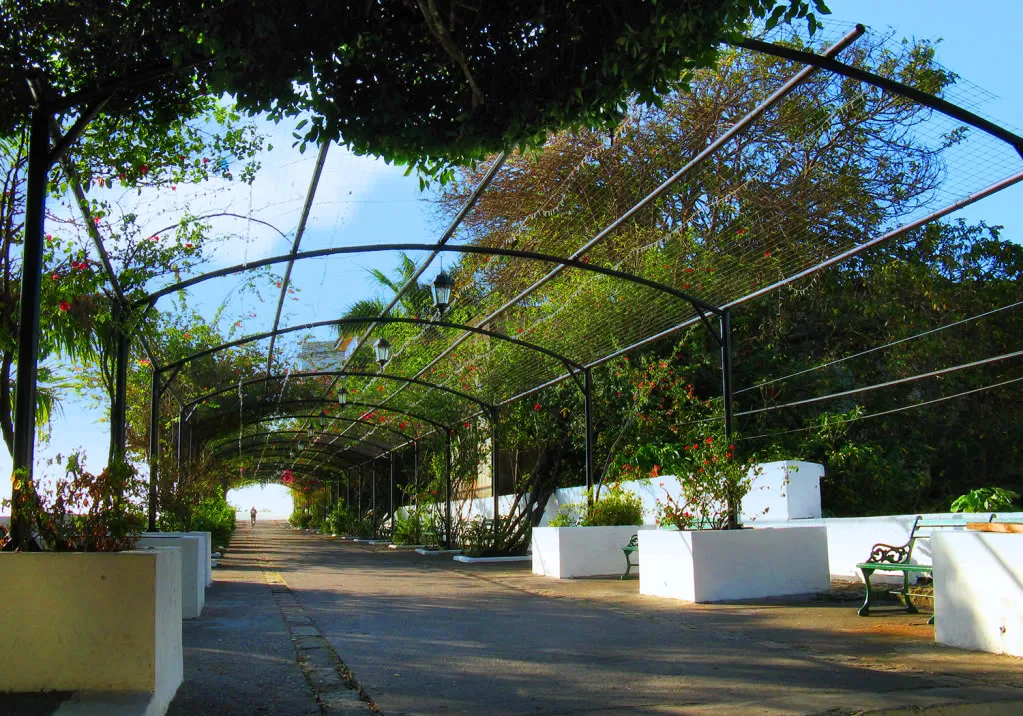
This elevated walkway runs along the historic defensive walls and is lined with bougainvillea.
Visit during clear weather to see both the old and new city.
Navigate the historic streets effectively by focusing on comfort and local awareness.
Wear broken-in walking shoes with closed toes, as the historic cobblestones are uneven and can be slippery when wet. Avoid flip-flops or thin-soled sandals to prevent foot fatigue and minor injuries on the aged pavement.
Carry a reusable water bottle and refill it at local cafes, as the humidity remains high throughout the day. Staying hydrated is essential for maintaining energy levels while navigating the sun-exposed plazas.
Stick to the primary, well-lit streets when walking between plazas to ensure you stay within the frequent patrol zones. Use offline maps to track your location, as narrow alleys can sometimes cause GPS signals to drift.
Utilize the shaded sides of the streets, which shift depending on the time of day, to stay out of direct sunlight. A wide-brimmed hat provides better coverage than standard sunglasses alone during the midday period.
Be mindful that many buildings remain private residences; avoid stepping into doorways or courtyards unless they are clearly marked as public establishments. Respecting these boundaries ensures a positive interaction with the local community.
Everything you need to know about casco viejo walking tour free
You can certainly wander through the historic streets independently, as there is no entry fee for the area. While a self-guided casco viejo walking tour free of cost is popular, many visitors also choose to join local groups for additional context.
Yes, the area is a public space that welcomes visitors to walk its streets and squares. Navigating the colonial architecture and plazas at your own pace is a great way to see these Panama landmarks.
The most flexible method is to design your own route through the UNESCO heritage site. By planning a personalized casco viejo walking tour free of a strict schedule, you can spend more time at the sites that interest you most.
Some local organizations offer tip-based excursions where the cost is voluntary rather than mandatory. These guided sessions provide deep insights into the history of the old quarter, including the fortifications and Spanish colonial ruins.
The neighborhood is open to the public daily from 00:00 to 23:59. This constant access allows you to enjoy the evening illumination or the morning atmosphere whenever you prefer.
Since the district is a publicly accessible historic zone, no tickets are required for general entry. You can simply arrive and begin your exploration of the plazas and monuments without prior booking.
Families are encouraged to explore the area, as it provides a safe and engaging environment for children. The open squares are perfect for a casual walk, though staying aware of traffic on the narrow streets is advised.